Harrisburg, Dec. 5, 2014 — State Sen. Jay Costa (D-Allegheny) expressed his thoughts today on the life-saving actions of Rankin Police Chief Ryan Wooten who responded to a serious two-vehicle crash with multiple injuries on the Rankin Bridge yesterday morning:
“The actions of Police Chief Wooten to resuscitate a small child involved in the accident were extraordinary, heroic and selfless. I have known Chief Wooten for many years. He is a role model whose service and leadership have made our community a better place.
“Chief Wooten’s actions personify the unwavering commitment and dedication our first responders have to the communities and the people they are sworn to serve. Our Steel Valley communities are fortunate to have an officer like Chief Wooten among their ranks.
“My thoughts and prayers continue to be with everyone involved in this serious accident, including the young child saved by Chief Wooten.”
###
Media contact: Stacey Witalec, 717 877-2997
Senate Democratic Caucus and Sen. Jay Costa
switalec@pasenate.com
Harrisburg – Dec. 3, 2014 – Senate Democratic Leader Sen. Jay Costa (D-Allegheny) and Senate Democratic Appropriations Chair Sen. Vincent J. Hughes (D-Phila.) said the $ 2 billion plus budget deficit disclosed at today’s Mid-Year Budget Briefing should be laid at the feet of Gov. Tom Corbett and his Republican legislative allies.
The briefing, hosted by the Corbett administration, is an annual December event that provides a budget status report to legislative leaders.
[hdvideo id=119]
Costa and Hughes’ released the following statements in reaction to today’s disclosure:
Sen. Jay Costa:
“The Republicans who created the $2 billion-plus deficit need to be accountable and take responsibility for closing this gaping hole. This was all so predictable. Senate Democrats couldn’t have been clearer about the budget gimmicks and short-term fixes that were contained in last year’s Republican budget.
“We said that the budget was badly flawed and that’s why we were so strongly opposed to the spending plan. The Corbett administration and Republicans in the House and Senate need to acknowledge their role in making Pennsylvania’s fiscal house a shambles.
“The mid-year briefing was a sad closing commentary on failed, short-sighted policies. It’s clear that the Corbett administration failed to have a plan on how to manage resources and provide strategic investments to move Pennsylvania forward.”
Sen. Vincent Hughes:
“The cause of the problem is simple: Over the past four years Republicans failed to articulate and implement a jobs plan that makes growing our economy a priority. Going from ninth to dead last among all states in job creation in four years demonstrates how little attention has been paid to actual state of Pennsylvania’s economy.
“What is even more frustrating is, despite their lack of vision, creativity and effective policies, the Corbett administration and the Republican-controlled House and Senate still found a way to reward their corporate friends with billions in tax cuts at the expense of education, social safety net programs and the middle class.
“Senate Democrats have predicted this result since year one of the Corbett administration. Unfortunately, the Republican majorities in the House and Senate were willing co-conspirators in the pilfering of the commonwealth’s finances. Now we must focus on the arduous task of placing Pennsylvania back on strong financial ground. We look forward to working with Governor-elect Wolf and the new leadership in the House and Senate Republican caucuses to make sure that happens.”
-30-
Media contact: Stacey Witalec, 717 877-2997
Senate Democratic Caucus and Sen. Jay Costa
switalec@pasenate.com
Ben Waxman
Office of Sen. Vincent J. Hughes
215-266-4598
# # #
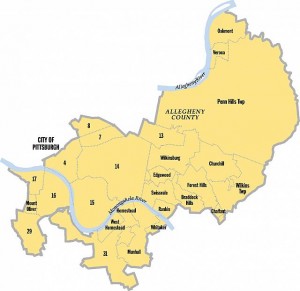
Harrisburg – Dec. 1, 2014 – State Sen. Jay Costa (D- Allegheny) said today that he was excited to begin serving citizens in the newly configured 43rd Senate District.
“As a result of reapportionment, all Senate districts in Pennsylvania were redrawn to adjust to changes in population,” Costa said. “The district was reconfigured within Allegheny County and includes the largest portion of the City of Pittsburgh as well as communities in the Steel Valley and the East Hills.”
The new district alignments took effect today.
Costa said that his local offices are well-positioned to serve the new areas of the district and build relationships just as he has done in municipalities that remain in the district. His district offices are located in Forest Hills, Carrick and Homestead.
“I am very proud of the constituent service that is provided by the staff in our district offices and how they reach out to solve problems,” Costa said. “I look forward to working with community leaders and building rapport with citizens in the new sections of our district.”
Costa said that he conducts many local events including town halls, shredding events, veterans outreach, flu shot clinics and provides specific services.
The district now includes Mt. Oliver and the following wards in the City of Pittsburgh: 4, 7, 8, 13, 14, 15, 16, 17, 29 and 31. Also included in the district are Munhall, Homestead, West Homestead, Whitaker, and Rankin in the Steel Valley. The East Hills communities are Oakmont, Verona, Penn Hills, Churchill, Wilkinsburg, Braddock Hills, Forest Hills, Chalfant, Swissvale, Wilkins Township and Edgewood.
-30-
Harrisburg – Nov. 21, 2014 – State Senate Democratic Leader Sen. Jay Costa (D-Allegheny) issued the following reaction to incoming Senate Majority Leader Jake Corman’s (R-Centre) comments about the possibility of a lame-duck legislative session in January.
The session would be convened in the last couple weeks of Gov. Tom Corbett’s term.
“The suggestion by the incoming Senate majority leader that the General Assembly engage in a lame-duck session in January – to take advantage of Governor Corbett’s last days in office – is inappropriate, unprecedented and inexcusable. The citizens have spoken and they have chosen a different governor with new ideas to move Pennsylvania forward.
“The ill-conceived idea to empower and use an unaccountable governor in his last days in office to revive already rejected policies would be viewed as an act of desperation and a serious blow to reform. I would be very surprised if Governor Corbett would allow himself to be used by Republican leadership in this way.
“The voters of Pennsylvania spoke loudly and clearly that they wanted Governor Wolf to work with lawmakers on solutions, not to perpetuate gridlock. The idea that a January lame-duck session would be productive is ludicrous and counter to any conceivable measure of good government. “
Harrisburg, Nov. 12, 2014 – Senate Democratic Leader Sen. Jay Costa (D-Allegheny) was re-elected to lead his caucus in the next legislative session.
Costa will be joined by a leadership team that will assist in devising policy solutions on key issues such as job creation, education investment, tax reform and repairs to the social safety net, he said.
“It is a great honor to be elected by my colleagues to lead our caucus for this session,” Costa said. “We have a great many challenges ahead of us but we have a wonderful opportunity to work with the new governor in crafting policy that helps all the citizens of Pennsylvania.
“Senate Democrats have a strong leadership team that will lead an energetic caucus.”
Costa, who will begin his third two-year stint as Democratic leader, will be assisted by Sen. Anthony H. Williams (D-Philadelphia) who was re-elected Democratic Whip. Democratic Appropriations Chair Sen. Vincent J. Hughes (D-Phila.) was also re-elected as Democratic chair of the committee.
“I am honored and appreciative to serve my colleagues in this role and look forward to developing solutions that address key issues and solve problems for Pennsylvanians,” Williams said.
Hughes has served as Democratic Chair of the Appropriations Committee since the beginning of the 2011-12 session.
“I am thankful for the support of my colleagues and the faith they have placed in me as Appropriations Committee chairman,” Hughes said. “Governor Corbett left us with a dire economic situation in an environment that he created. I look forward to working with Governor-Elect Wolf, our caucus and all members of the senate to address issues facing families.”
Costa, Williams and Hughes will be accompanied by a number of Senate Democrats who were either elected to different leadership positions or will join the team for the first time.
Sen. Wayne Fontana (D-Allegheny) was elected caucus chairman succeeding Sen. Richard Kasunic (D-Fayette) who retired at the end of this term.
“In my role as caucus chair, I will have input into how Senate Democrats manage information, provide analysis and respond to key issues,” Fontana said. Fontana previously served as Democratic Caucus Administrator.
Senator Lisa Boscola will remain the Senate Democratic Policy Committee chair.
“Our policy committee has been very active in support of Senate Democratic initiatives,” Boscola said. “I look forward to working hand in hand with the administration and my Senate Democratic colleagues in crafting realistic and responsible policy that will impact future generations.”
Sens. Larry Farnese (D-Philadelphia), John Yudichak (D-Luzerne) and John Blake (D-Lackawanna) will become members of leadership for the first time.
Farnese was elected Caucus Secretary and will manage gubernatorial appointments to various boards and agencies.
“It is a great honor to serve our caucus as a member of the leadership team,” Farnese said. “I look forward to working with my colleagues and becoming a strong voice in caucus deliberations.
“In my view, there is no reason that we cannot find common ground among disparate positions on critical issues.”
Yudichak will become Caucus Administrator, replacing Sen. Wayne Fontana.
“Senate Democrats can play a large role in being advocates for the new governor’s policies as we continue to pursue the adoption of many of the proposals that have been crafted by our caucus over the years,” Yudichak said. “A united leadership team working in concert with the new administration can change minds and provide a path forward for all citizens.”
Blake was appointed by the caucus as Democratic Vice Chair of the Senate Appropriations Committee.
“In the next several years, Pennsylvania will have to manage extremely tight finances and dwindling resources,” Blake said. “We can use innovative approaches, new ideas and common sense to move us in a new direction.”
The leadership positions are effective Dec. 1.
###
Harrisburg – Oct. 8, 2014 – State Sen. Jay Costa (D-Allegheny) expressed his thoughts on the death of former Sen. Mike Waugh of York County. Senator Waugh served as a member of the General Assembly for more than 20 years.
“Today Pennsylvania is mourning the loss of a great public servant. Senator Mike Waugh was a distinguished and honorable man. He served the citizens of York County admirably both in the House and the Senate.
“Mike made his mark on agricultural, emergency services and building construction issues. He was a leader in each of these areas and his fine work will carry on.
“Mike was well-liked by everyone, was greatly respected and will be sorely missed. Our thoughts and prayers go out to his family and friends during this difficult time.”
-30-