HARRISBURG, March 4, 2013 – The Allegheny County Airport will be receiving a $512,000 state grant for the design and construction of hangars.
“The Allegheny County Airport plays an important role in aiding business and commerce in the Pittsburgh area,” said State Senate Democratic Leader Jay Costa (D-Allegheny). “This funding will help position the airport to handle more business in the future.”
The $512,000 grant for the West Mifflin facility was one of 10 funded by the Capitol Budget/Transportation Assistance Program. The grants are made available through bond dollars from Pennsylvania’s General Fund budget. Statewide, the $10 million in grants funds is expected to leverage another $11 million in local matching funds.
Costa said the Allegheny County Airport is the seventh busiest airport in Pennsylvania, supporting more than 75,000 takeoffs and landings per year. The Allegheny County Airport supports a high volume of business and corporate flights every day, while also offering flight instruction, maintenance and flight training for pilots through the on-site Pittsburgh Flight Training Center.
There are 133 public use airports in Pennsylvania.
The grant was approved by the State Transportation Commission on February 14.
###
[frame align=”none”] [/frame]
March 1, 2013 — State Senator Jay Costa (D-Allegheny) today joined with educators and school children and celebrated the importance of reading with children.
Costa said he was proud to be part of the National Education Association’s ‘Read Across America program again this year, celebrating the birthday of the great Dr. Seuss with third grade students from New Emerson Elementary in West Mifflin.
“What a great way to partner as parents, educators and neighbors in reading to our children and preparing them for success in school,” said Costa.
Across the nation, more than 45 million readers participated in this fabulous celebration of reading and learning.
“Our youngest Pennsylvanians deserve nothing less than the best and this wonderful program delivers that and more, year after year,” Costa said.
The senator extended his sincere thanks to the students and faculty from Emerson Elementary for allowing him to be part of their special day.
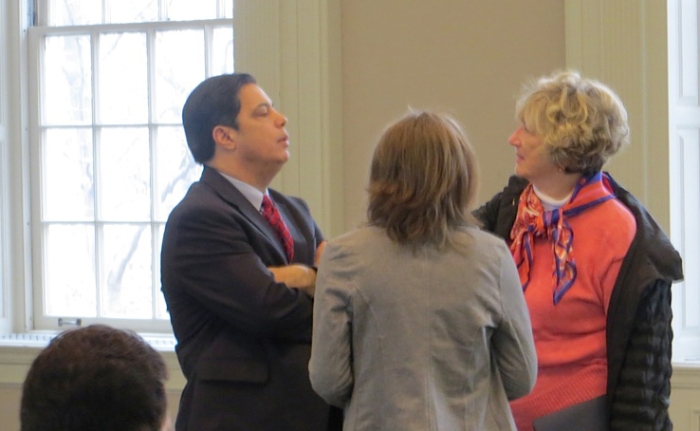
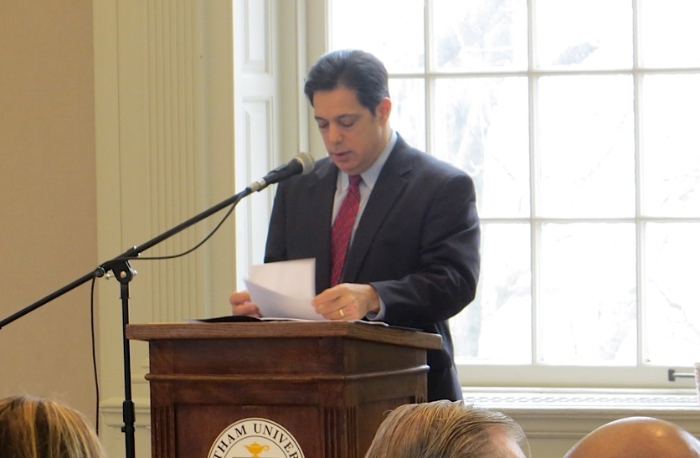
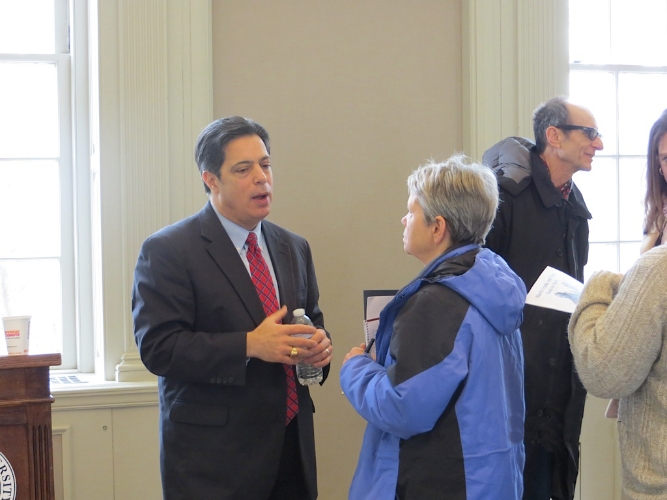
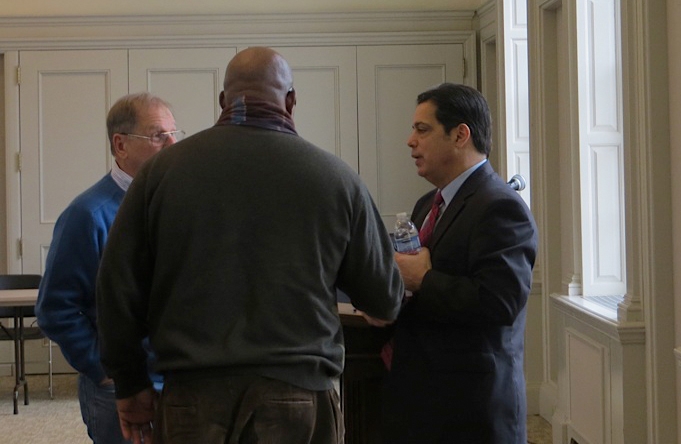
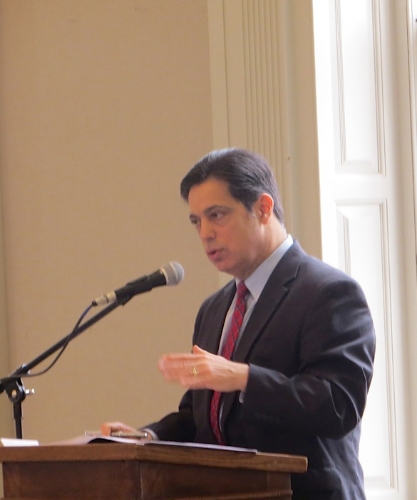
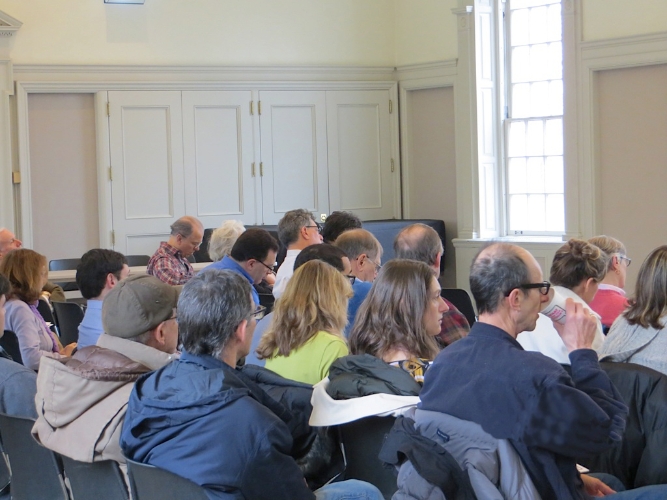
February 25, 2013 – Senate Democratic Leader Jay Costa (D-Allegheny) held a town hall meeting at Chatham University in the Laughlin Music Hall, Welker Room on Saturday, February 23rd from 10 a.m. to 11:30 a.m.
[divider top=”0″]
###
FOREST HILLS – February 22, 2013 – Senate Democratic Leader Jay Costa (D-Allegheny) said that public input is critical to having a fair and informed budget process in Harrisburg and that Town Hall Meetings are invaluable in gaining insight from citizens of the Pittsburgh area.
Costa’s next town hall meeting will be held at Chatham University in the Laughlin Music Hall, Welker Room on Saturday, Feb. 23 from 10 a.m. to 11:30 a.m. All citizens are welcome and encouraged to attend.
“There are some very serious budget decisions facing lawmakers this year,” Costa said. “It’s important that citizens have their voices heard, whether it’s about growing jobs, education, transportation, privatization or any other state matter. Taxpayers need to have a place at the budget table.”
“My colleagues and I believe there are a number of things to discuss in the governor’s budget proposal,” said Costa.
Costa will hold a series of meetings with residents of the 43rd District to learn their priorities and concerns when it comes to the budget and other state issues.
The senator plans to utilize the feedback he gathers from the discussions in the town hall meetings when he participates in upcoming state budget negotiations in Harrisburg.
For more information about Sen. Costa’s town hall meetings, visit: https://senatorcosta.com/senator-costa-announces-next-town-hall-meeting.
Harrisburg, February 14, 2013 – State Senate Democrats applauded Pennsylvania Attorney General Kathleen Kane’s decision to reject the Corbett Administration’s plan to privatize the management of the Pennsylvania Lottery to a U.K.-based company Camelot Global Services.
“The Attorney General made a proper decision,” Sen. Jay Costa (D-Allegheny) said. “Pennsylvania seniors and all Pennsylvania residents can rest easy now that the Attorney General took this action and put a stop to the expansion of gaming without proper authorization.”
“The entire plan was flawed.” Costa, the Democratic Leader said. “It is clear that there are ways for current employees of the Lottery to be given the latitude to implement changes that will produce better results and even more money being generated.”
At a news conference today in Harrisburg, Kane said that she could not approve the deal negotiated between the Corbett Administration and Camelot. The Attorney General cited several reasons for her denial including that the arrangement infringed on the legislative powers of the General Assembly, that the plan was an illegal expansion of gaming without proper authorization and that the plan involved a waiver of sovereign immunity.
State Sen. Vincent Hughes (D-Philadelphia/Montgomery) who serves as Democratic Chair of the Senate Appropriations Committee said that Kane took the correct course in refusing to approve the Private Management Agreement (PMA.)
“We do not need a foreign-based company managing the operations of the Lottery when we have Pennsylvania residents with the ability to produce more dollars to bolster senior programs.” Senate Democratic Appropriations Chair Sen. Vincent Hughes said.
“The AFSCME study indicated that there were many pathways available for Pennsylvania officials to take to generate new dollars without privatizing the Lottery,” Hughes said. “There are tools available for the legislature to give to the Lottery that will produce a better deal. Plus, we can be transparent with our action and deliberation.”
The recommendations made by AFSCME were contained in a counterproposal that the union generated following the governor’s decision to privatize the Lottery. AFSCME indicated in its presentation that it could generate $1.5 billion more in lottery profit.
“We can do a better job and do it in an open process involving the current Lottery personnel,” Sen. Anthony Williams (D-Philadelphia/Delaware), the Senate Democratic Whip said. “The Attorney General was clear that the General Assembly needs to be involved and that arbitrary action cannot be taken by the administration.
“There is no reason why we cannot open the process and allow the Lottery to suggest ways it can generate even more profits.”
State Sen. John Blake (D-Lackawanna/Luzerne/Monroe), the Democratic Chair of the Senate Finance Committee, said that there were so many questions about the privatization scheme that went unanswered and that the whole process needs to be restarted at the beginning and include the General Assembly.
“From the time the PMA was announced there has been great unease about the process and the procedures that were included in the deal,” Blake said. “I am pleased that Attorney General Kane put a roadblock up today and announced her decision to deny the PMA.
“Now members of the General Assembly can look at ways on building on the strengths of the successful Lottery that we now operate to generate more funds for seniors, using employees of the Lottery who are Pennsylvania residents.”
Costa said that he especially appreciated the fact that Attorney General Kane removed politics from the decision, focused on the legal issues involved in the contract and made the right call on behalf of Pennsylvania’s seniors.
Hughes said that there is no question that lawmakers will be able to generate the $50 million that was part of the agreement and that was included in the governor’s budget presentation.
-30-
Contact:
Stacey Witalec| Press Secretary
Senator Jay Costa and Senate Democratic Caucus
535 Main Capitol | Harrisburg, Pa 17120
Phone:(717)772-2368 | Cell:(717)877-2997
www.senatorcosta.com
Harrisburg, February 11, 2013 – State Sens. Jay Costa (D-Allegheny) and John Blake (D- Lackawanna/Luzerne/Monroe) said that instead of outsourcing the Pennsylvania Lottery’s operations to a U.K. company, Camelot Global Services, the governor should allow the Lottery to implement AFSCME’s recommendations to raise new revenue.
“Instead of privatizing the management of the Pennsylvania Lottery, the governor should instruct the Lottery to move on many of the recommendations made in the AFSCME report so that hundreds of millions in new revenue can be generated,” Costa, the Senate Democratic Leader, said. “If current Lottery employees were given the latitude that is called for in the PMA with Camelot, they would clearly equal or exceed the revenue projections of the proposed contractor.”
“Instead of privatizing lottery operations without the consultation of lawmakers, we should be using our current, dedicated and capable Pennsylvania employees to grow the Lottery and generate more revenue to aid our seniors,” Blake said.
Blake, who serves as the Democratic Chair of the Senate Finance Committee, said that it would make more sense to build on the strengths of a successful system and a successful Lottery workforce rather than turning the entire operation over to a private, for-profit enterprise.
“I see no reason why we need to privatize the Lottery using a foreign concern when we can implement many of the recommendations made in the AFSCME report to boost revenue,” Blake said. “The governor should reconsider the decision on outright privatization and instead build on our successful system by expanding its discretion and simply augmenting its operations with any needed outside marketing or managerial experience.”
The recommendations made by AFSCME were contained in a counterproposal that the union generated following the governor’s decision to privatize the Lottery using a Private Management Agreement (PMA). AFSCME indicated that it could generate $1.5 billion more in lottery profit.
A recent Franklin and Marshall survey indicated sixty-four percent of registered voters who were asked oppose privatization of the Pa Lottery.
“The AFSCME proposal contains recommendations that will boost revenue, institute more internal controls and provide for greater accountability. We need to give our Lottery and our workers a chance to create more revenue and expand before we send the management of our system overseas,” Costa said.
-30-