PITTSBURGH, April 23, 2019 – At the request of state Senate Democratic Leader Jay Costa (D-Forest Hills) and Senator Wayne Fontana (D-Brookline), the Senate Democratic Policy Committee held a hearing today in Pittsburgh on strategies for combatting climate change by reducing methane gas emissions.
“Methane has a huge impact on global warming,” Costa said. “As the second largest gas-producing state in the nation, it is imperative that Pennsylvania do all it can to reduce methane emissions.”
Fontana added, “While our federal government should be taking the lead on developing policies, emissions reduction goals and coordinating a national response on climate change, our president’s shameful abandonment of the Paris climate accord makes it imperative that state leaders take the helm on this critical issue.”
Methane is an odorless, colorless, flammable greenhouse gas (CH4) that is used as fuel. It is also an important source of hydrogen and part of a wide variety of organic compounds. Methane is a huge component of natural gas and can remain in the atmosphere for about 9 to 15 years.
According to the Intergovernmental Panel on Climate Change, methane warms our planet 86 times more than carbon emissions. Earlier this month, Andrew Williams, who serves as director of Regulatory and Legislative Affairs for the Environmental Defense Fund, criticized the Pennsylvania State Department of Environmental Protection’s revised draft rule because it would only mandate the capture of 21 percent of methane emissions. If the rule were adopted, Williams claims Pennsylvania would have the least protective methane rule in the nation.
Sen. Lisa Boscola (D-Northampton/Lehigh), who chairs the committee, argued that the issue should not pit Pennsylvania’s environment against its economy.
“Controlling carbon emissions and building a strong economy are not competing interests,” she said. “As alternative energy sources become more reliable, affordable and efficient, we must be ready to embrace and capitalize on the economic opportunities that accompany these promising technological advances. This doesn’t need to be framed as some dire choice between poverty and pollution.
In withdrawing from the Paris Climate Accord in 2017, President Donald Trump defended his decision by claiming he was “elected to represent the citizens of Pittsburgh, not Paris.” Costa and Fontana (D-Allegheny) immediately criticized the president’s decision.
In the accord, the United States had committed to reduce its greenhouse gas emissions by 26-28 percent below the 2005 level in 2025, and to make “best efforts” to reduce emissions by 28 percent. That would include curbs on carbon dioxide, methane, nitrous oxide, perfluorocarbons, sulfur hexafluoride and nitrogen trifluoride, all of which contribute to global warming.
Several state bills and proposals were introduced to supplement existing environmental protection efforts included in the decade-old Alternative Energy Portfolio Standard (AEPS) and Energy Efficiency and Conservation law (Act 129).
Williams urged the legislature to support Gov. Tom Wolf’s greenhouse gas reduction commitments, implement a viable methane existing source regulation and defend the Department of Environmental Protection’s authority to regulate greenhouse gases.
Rob Altenburg, Director, PennFuture Energy Center, said, “The natural gas industry is going to be part of the Pennsylvania economy for many years, but we are no longer in an era where we can ignore pollution as a natural consequence of economic growth. Avoiding the worst impacts of global warming requires that we remain under a set carbon budget – and that means that any additional emissions from the natural gas sector are emissions we will need to account for later or face the costs.
Arvind Ravikumar, an Assistant Professor of Energy Engineering for the University of Harrisburg, told the senators, “With the profusion of new technology in the methane space, falling costs for renewable energy, and competitive electric vehicle prices, protecting the environment almost becomes secondary to the potential for thousands of high-paying, clean energy jobs. The best way to give Pennsylvania businesses and industry a leg up is to help them prepare for the transition through well-crafted, cost-effective state policies.”
Today’s hearing was the second in a series of Policy Committee hearings on climate change. The committee held a hearing in Pittsburgh last November, focusing on carbon emissions.
Joining Fontana, Costa and Boscola at the hearing were Senators Lindsey Williams (D-Allegheny) and Jim Brewster (D-Allegheny/Westmoreland).
Hearing participants included the following:
- Andrew Williams, Director of Regulatory and Legislative Affairs, Environmental Defense Fund;
- Rebecca Kiernan, Senior Resilience Coordinator, City of Pittsburgh;
- Arvind Ravikumar, Assistant Professor of Energy Engineering, University of Harrisburg of Science and Technology;
- Jared Metcalf, USA Operations Manager, Target Emission Services;
- Rob Altenburg, Director, PennFuture Energy Center; and
- Jane Worthington and Dale Tiberie, residents of Washington County.
# # #
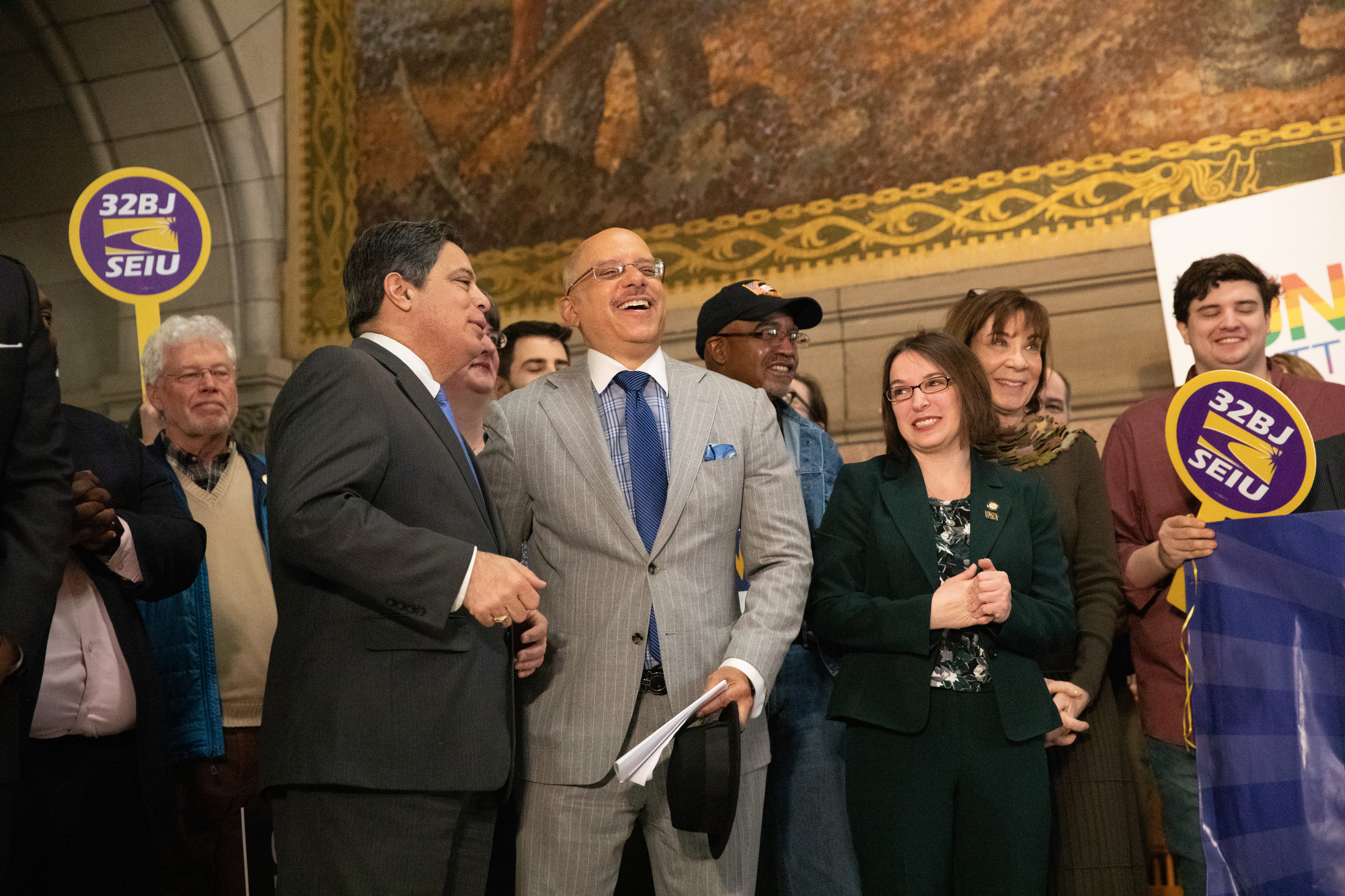
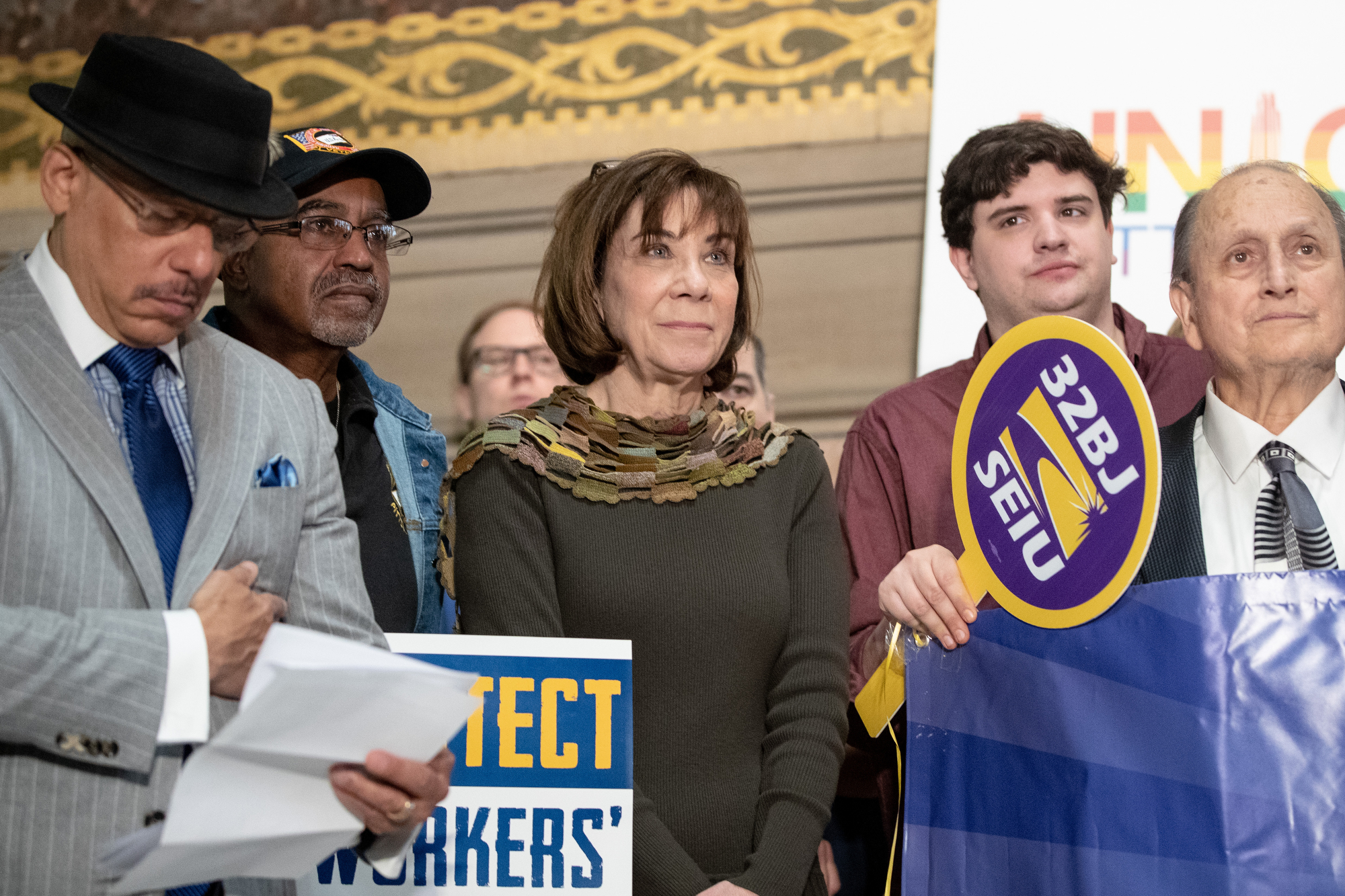
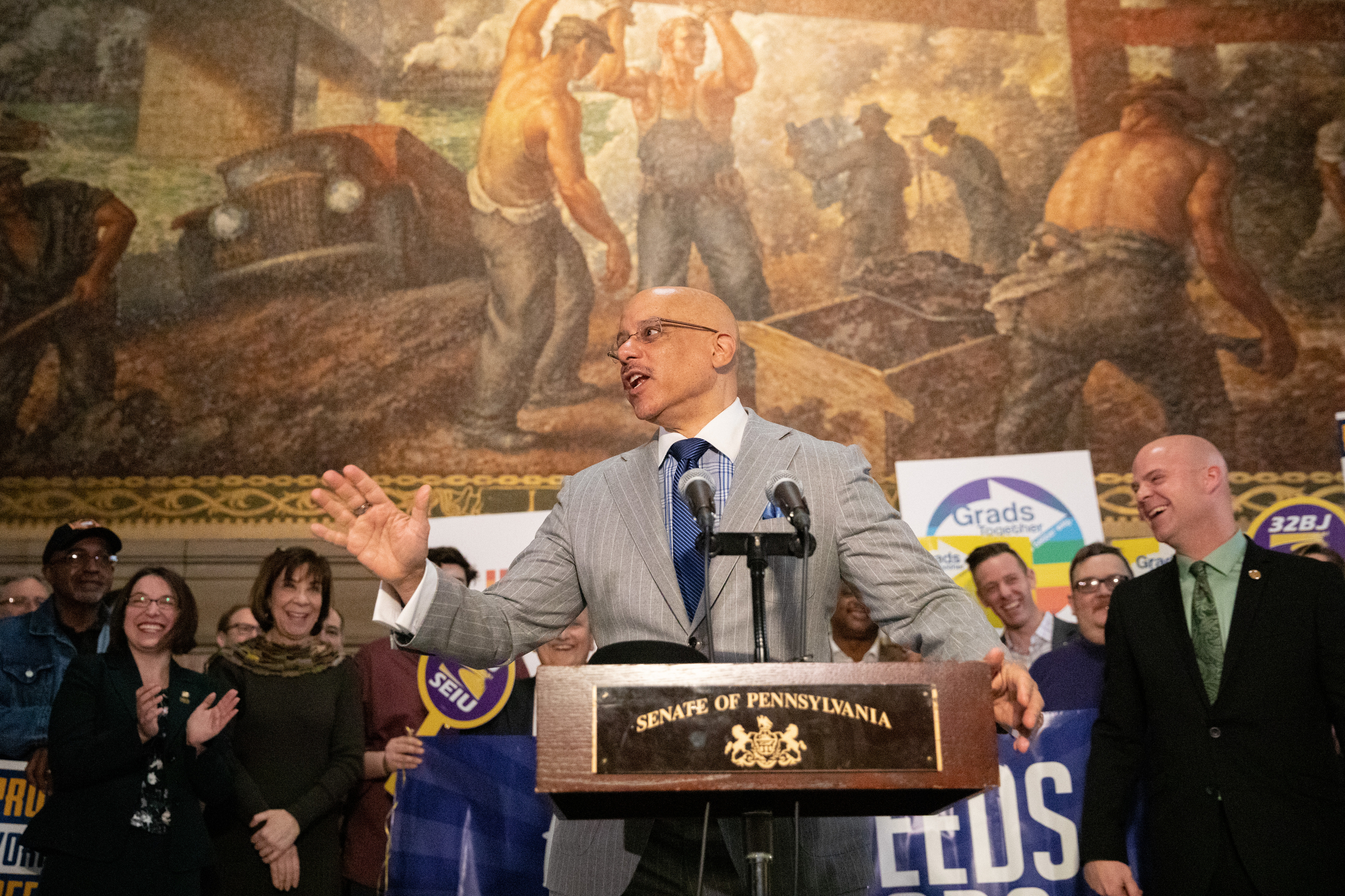
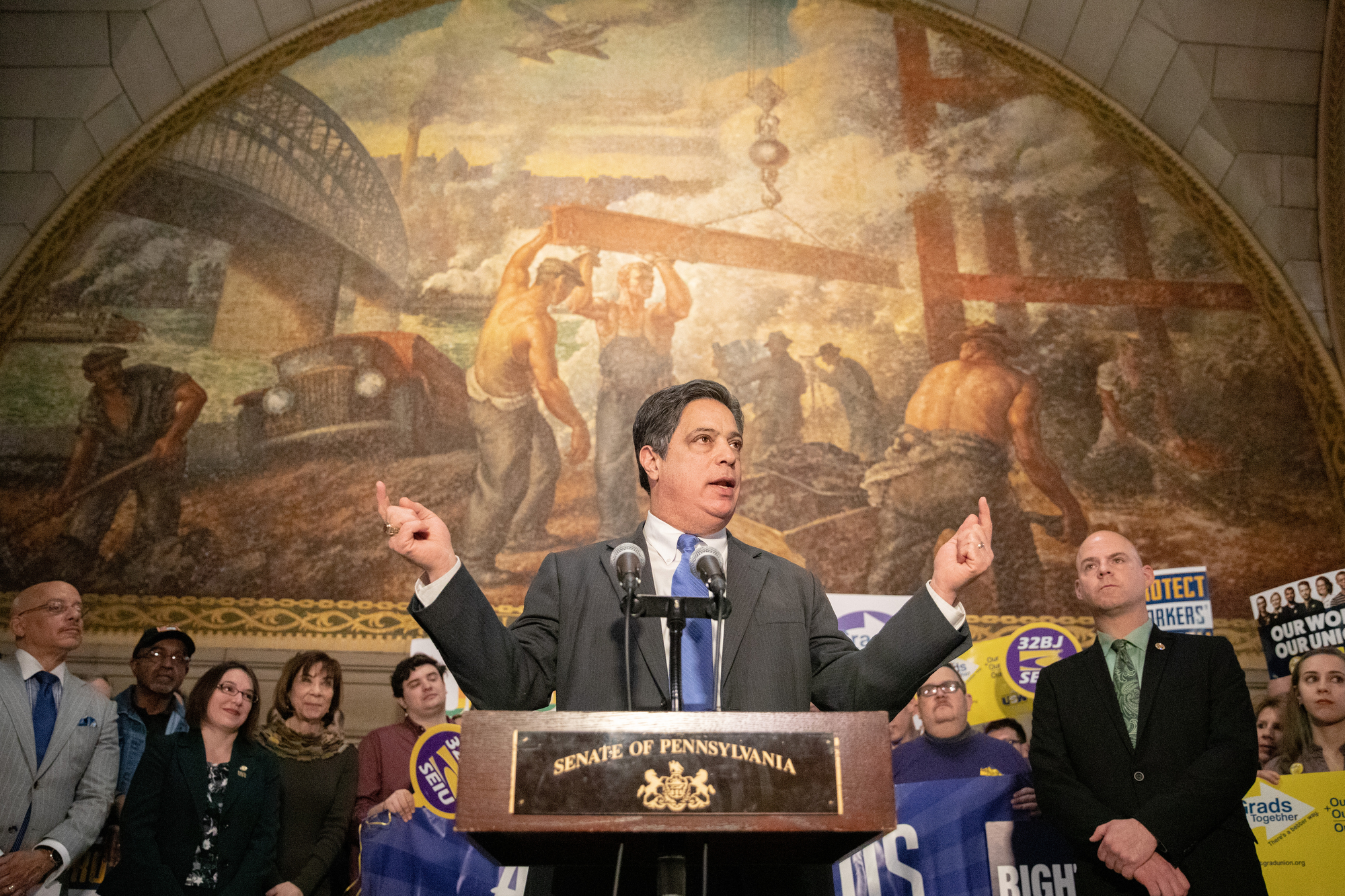
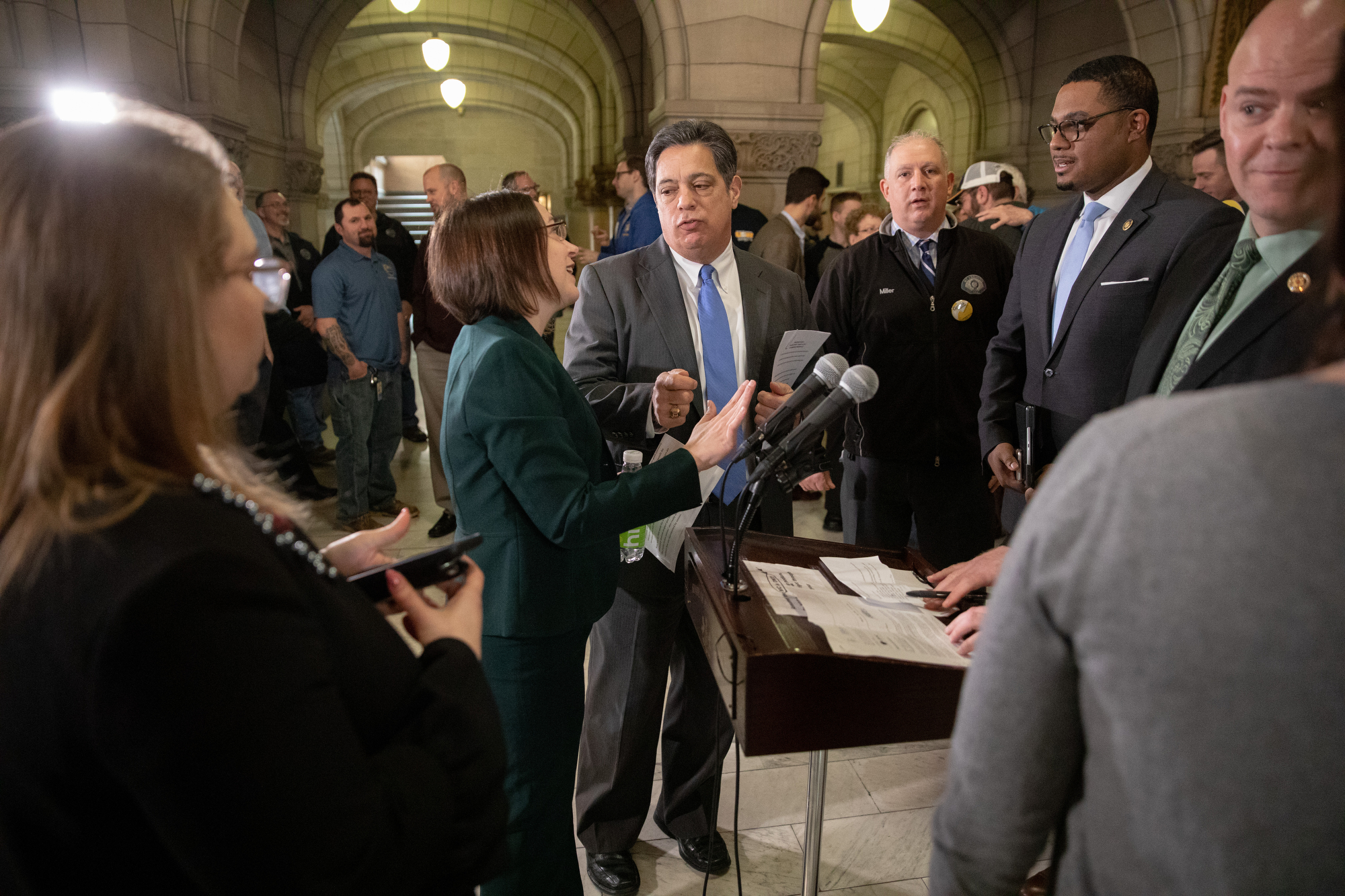
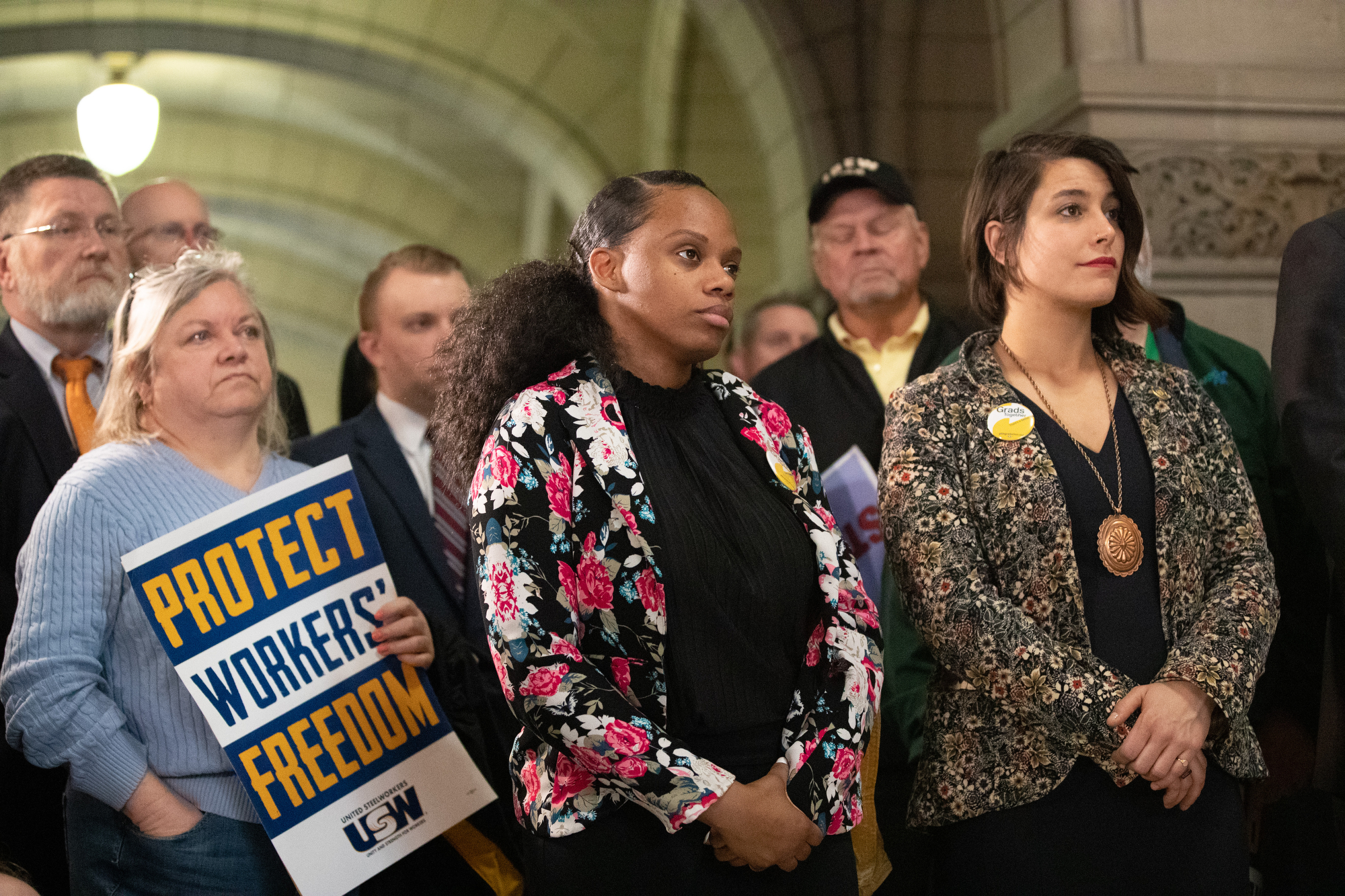
Pittsburgh, Pa. − March 14, 2019 − Senators Lindsey M. Williams, Jay Costa, and Vincent J. Hughes, joined by local elected officials, Allegheny County Labor Council members, and a crowd of union workers, announced the introduction of the Workplace Freedom Act today at the Allegheny County Courthouse.
The Workplace Freedom Act legislation protects Pennsylvania workers by strengthening collective bargaining in two ways. First, it eliminates the requirement for a two-tiered election process by allowing for a simple card check where expressing majority support would be sufficient. Second, it requires access to certified unions to new employees so that union membership benefits can be clearly explained.
“I get really fired up when someone says ‘I’m not anti-union. I love those building trades. I just don’t like public sector unions,’” said Senator Williams. “But that isn’t how being pro-union works. First, an injury to one is an injury to all. Second, the statement that ‘I don’t like public sector unions’ vastly discounts the wide variety of public sector workers represented by unions, including our firefighters, 911 operators, police officers, Fish and Boat Commission officers, and even public works employees, electricians, and carpenters at government agencies across the Commonwealth.”
“Unions have long helped workers earn better wages, health care, safety and retirement benefits, which is why we want to ensure unions can continue to work for future members,” Sen. Hughes said. “Pennsylvania workers have seen their greatest gains through the negotiating power of the unions and will not tolerate further erosion of these critical institutions that put worker benefits first.”
“It’s time for elected officials to take a stand,” said Senator Costa. “Working families need elected leaders to stand up to attacks on union rights, and instead create more opportunities for Pennsylvanians to have the freedom to join and form unions. That’s why I’m signing on to the PA Workforce Freedom Act.”
Representative Dan Miller also spoke at the press conference, as well as SEIU members Caitlin Schroering, Pitt Graduate Student Organizing Committee and fourth year Ph.D. candidate; Nick Theis, UPMC Worker Organizing Committee and Medical Researcher at UPMC; Pam Johnston, SEIU 32BJ Executive Board Member and building cleaner at the University of Pittsburgh; and Wanda Smith, SEIU 668 Chapter Chair and supervisor at the Allegheny County Assistance Office.
###
Pittsburgh, Pa. − March 12, 2019 − Senators Lindsey M. Williams, Jay Costa and Vincent J. Hughes will hold a press conference to announce the introduction of the Workplace Freedom Act on Thursday, March 14, 2019 at noon at the Allegheny County Courthouse.
The Workplace Freedom Act legislation protects Pennsylvania workers by strengthening collective bargaining in two ways. First, it eliminates the requirement for a two-tiered election process by allowing for a simple card check where expressing majority support would be sufficient. Second, it requires access to certified unions to new employees so that union membership benefits can be clearly explained.
Over the past century, working Pennsylvanians have seen greater increases in their standard of living during periods of increased unionization. The Janus v. AFSME Supreme Court decision handed down this past June is a direct attack on middle class families. Unions not only provide firefighters, police officers, teachers, caseworkers, and government employees a living wage, but also the resources that allow them to serve taxpayers to the best of their ability.
WHO: Senator Lindsey M. Williams, Senator Jay Costa, Senator Vincent J. Hughes and other elected officials, and Allegheny County Labor Council members
WHAT: Press Conference Announcing Introduction of the Workplace Freedom Act
WHEN: Thursday, March 14, 2019 at Noon
WHERE: Allegheny County Courthouse Grand Staircase | 436 Grant Street | Pittsburgh, Pennsylvania 15219
###
Clairton, February 7, 2019 – With an overflow crowd of steel workers and concerned citizens in attendance at Clairton City Hall, a joint state Senate-House Democratic Policy Committee hearing was held today on ways to improve air quality, community notification procedures and emergency response.
The hearing was held in Clairton at the request of state Senator Jim Brewster (D-Allegheny/Westmoreland) and Representative Austin Davis (D-Allegheny). It was prompted by a December 24, 2018, fire at the Clairton Coke Works that resulted in emissions of high levels of sulfur dioxide and damage to the facility’s gas processing system.
“We need to see to it that air quality standards are properly monitored, and that local emergency response and community notification procedures are accurate and timely,” Brewster said. “To accomplish this goal, we must bring together officials from U.S. Steel, the Allegheny County Department of Health, local governments, labor organizations and emergency responders. We need to both address air quality issues and protect good paying jobs in the industry.”
Davis added, “Improving the air quality in our communities is my top priority. I appreciate the testimony of all stakeholders. As we look to improve air quality it’s imperative that we look for effective ways to do so.”
The hearing was jointly chaired by state Sen. Lisa Boscola (D-Northampton/Lehigh) and state Rep. Mike Sturla (D-Lancaster).
“Being raised in the shadow of the Bethlehem Steel plant, I am well aware of the seriousness of air quality issues and how communities such as Clairton must balance an economic reliance on good industrial jobs against health and environmental issues,” Boscola said.
Sturla added, “I thank Representative Davis for bringing this important issue to the House Democratic Policy Committee’s attention. This joint public hearing helps ensure that all perspectives are heard as the legislature looks for effective ways to improve air quality.”
Claiming that U.S Steel is committed to keeping the coke works operational and doing more to improve its environmental efforts, Chris Masciantonio, who serves as Director of Government Affairs & Public Policy for U.S. Steel, said, “The Mon Valley community is more than just the company’s home; it’s our company’s birthplace and where our employees work and live. The safety of our employees, our partnering contractors and our neighboring communities is paramount to our efforts.”
Masciantonio argued that placing the plant on hot idle, as some environmentalists have urged, would be a lengthy, difficult and costly process.
Don Furko, who serves as president of the United Steelworkers Local #1557, added, “Simply put, if U.S. Steel ends up idling batteries, our members will lose their jobs. This will begin a chain of events that will have a devastating impact on them, their families and our communities across the Mon Valley.”
Members of environmental organizations and Dr. Deborah Gentile of Pittsburgh testified that residents of the Mon Valley have been exposed to pollutants for decades. They said the pollution level and related health threats were compounded by the recent fire and emission exceedance.
Some of the environmentalists called for greater U.S. Steel efforts to comply with health and safety dictates and reduce pollution discharges. They also called on the Allegheny County Department of Health to step up monitoring, enforcement vigilance and provide more responsive public notification when problems arise.
Dr. Karen Hacker, director of the county health department, said the department has already ramped up its enforcement efforts. She said her agency has imposed direct enforcement orders and civil penalties. She said the department’s expanded legal team has also stepped up inspections, toughened penalties and collaborated with state and federal environmental enforcement agencies.
“The department will continue to be proactive and aggressive to improve air quality in our county, as our actions indicate,” she said. “We will continue to improve our communication via our current strategies through additional opportunities such as mobile phone applications and direct communication with citizens, municipal leaders and legislators.”
The hearing follows a January 22 public meeting in Clairton. Brewster, Davis and Senate Democratic Leader Jay Costa (D-Allegheny) and Rep. Bill Kortz (D-Allegheny) and Austin Davis (D-Allegheny) were also updated on January 25 by officials from the Allegheny County Health Department.
Joining Brewster, Boscola and Costa at today’s hearing were Senators Wayne Fontana (D-Allegheny) and Lindsey Williams (D-Allegheny). In addition to Davis, Sturla and Kortz, Representatives Summer Lee, Ed Gainey, Dan Miller, Brandon Markosek and Sara Innamorato (all D-Allegheny) attended.
Those who testified included:
Panel from U.S. Steel Corporation:
- Chris Masciantonio, Director of Government Affairs & Public Policy
- Mike Rhoades, Plant Manager, Clairton Coke Works
- Tishie Woodwell, General Manager, Environmental Affairs
- Kurt Barshick, General Manager, Mon Valley Works
- Jim Futrell, Vice President of Market Research and Analysis, Allegheny Conference on Community Development
Panel from Allegheny County Health Department:
- Dr. Karen Hacker, Director
- Jim Kelly, Deputy Director for Environmental Health
- Michael Parker, Solicitor
- Dr. LuAnn Brink, Chief Epidemiologist
Panel from area unions:
- Don Furko, President, United Steel Workers Local 1557
- Jeff Nobers, Executive Director, Builders Guild of Western Pennsylvania
- Ken Broadbent, Business Manager, Steamfitters Local Union 449
Panel of health and environmental advocates:
- Dr. Deborah Gentile, Physician, Pediatric Alliance
- Rachel Filippini, Executive Director, Group Against Smog & Pollution
- Matt Mehalik, Executive Director, Breathe Project
- Ashleigh Deemer, Western Pennsylvania Director, PennEnvironment
# # #
HARRISBURG, PA − January 16, 2019 −Members of the Senate Democratic Caucus stood together Wednesday, outlining the impacts of the federal shutdown on their constituents and addressing potential remedies at a state level.
“In my county of Allegheny, we have about 150,000 folks who will be impacted by the change to SNAP benefits, and we want to make certain that they understand what they can do and what steps they can take during this federal shutdown,” said Senate Democratic leader Jay Costa.
“Far too many real people with real needs have been affected by a senseless federal government shutdown and are at risk of suffering through no fault of their own,” Senator Vincent Hughes said. “We want to make sure the 1.8 million Pennsylvanians who receive SNAP benefits are aware of the shutdown’s impact and have the information they need to receive services through February and beyond.”
“The federal shutdown impacts Pennsylvanians in more ways than many people appreciate,” said Senator Shariff Street. “I along with several colleagues have encouraged our financial institutions to extend resources to federal workers so that they can provide for their children, pay utility bills and continue to function during this time.”
Senator Art Haywood stated that if the federal shutdown continues, there will be no SNAP payments for the month of February.
“Make the SNAP benefits last. You will get two payments this month and are expected to have that last with no certain end date to the federal government shutdown,” said Senator Haywood. “Donald Trump said, ‘what do you have to lose?’ and now we are finding out.”
“An additional component of this federal shutdown is the effect on science, and the effect on what we rely on to keep us safe and healthy,” said Senator Daylin Leach.
Leach spoke to the fact that during the shutdown federal agencies such as the Food and Drug Administration are not doing their regular inspections of food, the Nation Oceanic and Atmospheric Administration is not tracking and publishing weather patterns, and many scientists who work for the federal government are leaving for the private sector jobs.
Also in attendance at today’s press conference were Senators Andy Dinniman, Lindsey Williams, Steve Santarsiero, Anthony Williams, Maria Collett, Tim Kearney, Wayne Fontana, Larry Farnese and Katie Muth.
For more information about Pennsylvania resources for those struggling during this shutdown of the federal government, visit pasenate.com/snap for more information.
###
Watch full press conference below.