Pennsylvania − December 22, 2020 − Pennsylvania Senate Democrats seek to correct the record regarding the failure of the General Assembly to address housing insecurity due to COVID 19.
Recent press coverage has outlined that $108 million of $175 million intended for a rental and mortgage assistance program was diverted instead to the Department of Corrections. This was not the choice of Senate Democrats, who instead sought to correct the assistance program and get it to those Pennsylvanians on the cusp of losing their homes.
With Pennsylvania’s allocation of federal CARES funds, programs were funded or created to help residents who had suffered a change in their economic situation because of the pandemic ravaging the nation and world. One of those programs was a housing assistance plan that would provide relief to homeowners and renters.
Unfortunately, there were problems with the execution of this program – but instead of accepting its failure, Senate Democrats immediately convened meetings with stakeholders: advocacy organizations, landlords, renters, homeowners, financial institutions, and the PA Housing and Financing Agency. In September, Senator Katie Muth (D-Chester) chaired a hearing of the Senate Urban Affairs and Housing Committee where testifiers laid out the problems and told heart breaking stories of what would happen without state intervention.
Together with input from all of the relevant parties, Senator Art Haywood (D-Philadelphia) introduced Senate Bill 1290, a piece of legislation that would have corrected the problems with the program and allowed the full $175 million to flow to the people who desperately need it.
A companion bill was introduced in the House of Representatives and they passed it, but Senate Republicans did not consider either bill and let the hope for housing security die in our chamber – despite regular calls from Senate Democrats during session, committee hearings and publicly to address the problem.
Later in the fall, the Republicans refused to convene hearings of the Senate Urban Affairs and Housing Committee to avoid moving the House version of the bill to fix the housing assistance program.
In August, Senate Democratic Leader Jay Costa, Jr. and Senator Vincent Hughes (D-Philadelphia) sent a letter to the Republican leadership in the Senate asking them to move Senator Haywood’s legislation or its companion House bill before hundreds of thousands of Pennsylvanians are made homeless.
In October, Senator Costa held a press conference with Governor Tom Wolf and PHFA calling for the legislature to act immediately to prevent a housing crisis. Still, not only did Republicans fail to move legislation that would have corrected the relief program funded by CARES, they also failed to advance any bill that would have extended a moratorium on evictions and foreclosures.
In April, Senator Hughes introduced Senate Bill 1132 which would extend the moratorium on evictions and foreclosures to 60 days past the COVID emergency declaration. The Senate Republicans referred the bill to the Judiciary Committee, and never looked at it again.
Back in May, Senator Hughes tried again to extend the moratorium by amending the content of his SB 1132 into Senate Bill 976, as amendment A05557. It failed along party lines with every single Senate Republican voting against housing security.
Thousands upon thousands of Pennsylvanians have lost their jobs because of this virus. The virus has not slowed down, nor have the bills arriving in households across the state. We cannot continue to leave residents on their own to fight this; it’s inhumane. It’s the state’s role to help, and so far we have been stymied by the majority party in the General Assembly.
Senate Democrats recognized this looming problem from the very beginning of this crisis, and there was time to act.
There was the will in the Senate Democratic caucus to fix this; we had the money from the federal government to fix it; we had the time and the session days to pass thoughtful legislation, but the Republicans had other priorities. They chose to push veto override votes, to question the results of our secure and decisive election, and push ‘re-open’ bills instead of simply providing the aid that their constituents and small business owners were begging for.
It’s a shameful display of warped priorities from Republicans, but the Senate Democrats will continue to fight for the needs of Pennsylvanians. People over politics.
###
Pennsylvania − December 4, 2020 − Aiming to stimulate Pennsylvania’s economy by providing direct aid to workers, families, small businesses and other vulnerable populations, the Pennsylvania Senate Democratic Caucus announced a bold, innovative $4 billion pandemic relief plan Friday morning.
The Pennsylvania Coronavirus Aid, Relief & Economic Security Act of 2021 (PA CARES 21) Plan would fund previously existing aid programs and establish new programs to help struggling Pennsylvanians and struggling areas of the commonwealth’s economy.
“Folks have not seen pandemic-specific relief from the state or federal government since last spring, yet thousands remain unemployed, underemployed and struggle with their housing and utility bills. This cannot go on any longer,” said Senate Democratic Leader Jay Costa. “There are immediate needs in communities across this state that must be addressed immediately. We are in the middle of another surge in COVID cases, hospitalizations and deaths. We need help to recover, personally and financially; the state must play an active role in that recovery and that is what our plan today does.”
“Thousands of Pennsylvanians have been hurt by this pandemic and have received some assistance to get through this generational crisis — however it is time to do more in that space to get people the help they need,” Sen. Hughes said. “Rather than use federal dollars to help people in their time of need, we used the money to plug budget holes, telling people we had to keep state operations running to prevent further crisis. Having averted that crisis, it is now our job to step up and help our communities. They cannot wait any longer for help and the legislature must act now.”
PA CARES 21 authorizes the commonwealth to issue $4 billion in emergency debt to (1) recapitalize programs previously funded with federal CARES funds pursuant to Acts 2A, 24 and 30 of 2020 and (2) establish new programs that provide targeted assistance to struggling Pennsylvanians and struggling sectors of the Pennsylvania economy.
Where appropriate, this proposal utilizes the programs created under Act 24 of 2020 to drive out the funds. If proposed funding does not fit into an existing program (e.g., utility assistance), a new program will be created. Additionally, the caucus supports fixing programs created by Act 24 (e.g., PHFA’s rental assistance program) as requested by stakeholders to maximize program effectiveness.
The PA Senate Democrats propose allocating the funds to the following priorities (a detailed spreadsheet of the spending proposal is attached):
- $800 million in business assistance
- $1 billion in UC benefits
- $594 million in local government assistance
- $135 million in hazard pay
- $318 million in DHS programs
- $250 million in basic education
- $136 million in higher education
- $100 million to hospitals
- $100 million to utility assistance
- $75 million in child care
- $100 million in housing assistance
- $50 million in food security
- $25 million in pre-k education
- $25 million for PPE and vaccines
- $15 million for mental health funding
- $180 million in transportation funding
“There is no overstating the economic toll COVID has taken and continues to take on families and businesses across the Commonwealth,” said Senator Maria Collett (D-Montgomery). “As a former infection control nurse, I promise you that the sacrifices you’ve made have saved lives and prevented long-term health complications associated with this dangerous virus for so many. But I also know these words offer little comfort when you are struggling to pay the mortgage, or juggle your job and the constant changes to your kids’ schooling, or keep your business afloat. Government is supposed to work for you and that is exactly what our PACARES 21 proposal does. It identifies ways to get money into the hands of those who need it most, including those about to lose their COVID unemployment benefits, frontline workers, child care centers, and our main street businesses, especially local restaurants and bars, in the quickest, most efficient way possible. Your families and your businesses can’t afford to wait any longer for relief. So until our communities are safe and our economy is running at full steam again, it is critical that we extend this lifeline and do so now.”
“As the number of COVID-19 cases and deaths in Pennsylvania continues to climb, it is the General Assembly’s duty and obligation to provide relief to all those affected – unemployed folks, front-line workers, small businesses, and especially hospitals that serve high-Medicaid populations as well as our institutions of higher education,” said Senator Tina Tartaglione (D-Philadelphia). “These are the pillars of society that serve us in our times of greatest need and will lead our recovery.”
“There’s no denying that cases of the coronavirus are growing every day,” said Senator-elect Carolyn Comitta (D-Chester). “We need to do more than just say, ‘help is on the way.’ We need a bold, innovative plan to deliver it to Pennsylvanians. PA CARES 21 gives us more tools, more resources, and the flexibility to prepare for the future.”
“We are entering a stage of the pandemic that is, by virtually every measure, worse than the first stage, laying bare and exacerbating inequalities in all our health systems, devastating essential workers, and disproportionately harming Black and brown people,” said Senator-elect Nikil Saval (D-Philadelphia). “We need to keep people in their homes, fight hunger and food insecurity, and give our children every tool they need to learn. We need this stimulus because our communities desperately need support and relief.”
More information on the proposal and the caucus’ work in pandemic relief is available online at pasenate.com/pacares.
###
HARRISBURG – October 29, 2020 – Senate Democratic Leader Jay Costa and Senate Democratic Appropriations Chair Senator Vincent Hughes and members of the Pennsylvania Senate Democratic Caucus today slammed House and Senate Republicans for recessing the General Assembly until mid-November without passing legislation to drive out Pennsylvania’s remaining $1.3 billion in federal CARES funds to Pennsylvanians suffering the economic impacts of the coronavirus pandemic.
Earlier this year, Pennsylvania received nearly $4 billion from the federal government’s Coronavirus Aid, Relief and Economic Security (“CARES”) Act. In May, Democrats and Republicans worked together to drive out $2.6 billion of the federal funds to provide much needed aid to struggling Pennsylvanians. Since that time, Senate Democrats have strongly advocated for driving out the remaining $1.3 billion and released their own proposal for spending the remaining funding to provide additional relief. Unfortunately, Republican leadership in the House and Senate refused to act on another round of funding before recessing Oct. 21.
“It is unconscionable that Harrisburg Republicans would adjourn the General Assembly and leave town without acting on another round of CARES funding for Pennsylvania families and businesses,” Sen. Costa said. “For months Senate Democrats have been pressing for the release of the remaining $1.3 billion in CARES funds. I’d say House and Senate Republicans ignored us, but the reality is they ignored hurting Pennsylvania families. They ignored Pennsylvania’s small business owners that are hanging on by a thread. They ignored our hospitals, our schools, and our social service providers. Republican inaction is going to lead to more unnecessary suffering and lengthen Pennsylvania’s economic recovery. It’s shameful.”
“At a time when Pennsylvanians need real, bipartisan leadership, Harrisburg Republicans have failed miserably,” Sen. Hughes said. “House and Senate Republicans have been singularly focused on criticizing Governor Wolf for his handling of the pandemic, but when they had a chance to make an impact, they did nothing. They left $1.3 billion sitting in the state treasury and went home. Now, that money will sit there for weeks as more small businesses close, more child care providers struggle to stay afloat, and more families stay up at night wondering how they will pay their bills. It didn’t have to be this way.”
Similar inaction on a federal level has ended all talks of stimulus aid before the Nov. 3 election, leaving families, small businesses, front-line workers and many other vulnerable populations without much-needed aid. Costa and Hughes pointed to politically-motivated federal inaction and severely misplaced priorities by House and Senate Republicans, who the entire summer and fall politicizing the pandemic and Pennsylvania’s response to it rather than working with Democrats to drive out CARES funding.
“Throughout the summer and fall, we’ve watched House and Senate Republicans hold partisan hearings, pass politically-motivated legislation, and waste precious time on veto overrides that they knew would fail,” Sen. Costa said. “If they spent even a fraction of that time focused on helping people, I have no doubt we would have reached a consensus on spending the remaining $1.3 billion in CARES funds. Instead Republicans opted for political theatre.”
“All summer Republican Senators and Representatives stood at press conferences with small business owners and organized rallies to protest Pennsylvania’s response to the pandemic,” Sen. Hughes noted. “But when the press conferences and rallies ended, and the time came to help these same folks they claimed to be fighting for by driving out $1.3 billion, Republican legislators did nothing. They got their press release or their TV clip and the folks that stood with them were left without any help. Again. We cannot wait any longer to push out aid. Our plan must be on the agenda in November.”
The Senate Democrats again shared their plans in hopes that the Republican-controlled General Assembly would understand the immediate need of providing aid to vulnerable Pennsylvanians immediately. The Senate Democratic plan includes:
- $125 million for individual and family relief with utility bill assistance
- $575 million for business assistance, specifically for:
- Nonprofit assistance
- Main Street and Historically Disadvantaged Businesses
- Barbers, salons, personal care industry
- Tourism
- Bars, taverns, restaurants, private event spaces and hospitality
- $15 million food security
- $125 million for high Medicaid hospitals
- $141 million for higher education
- $75 million for child care
- $100 million for hazard pay in existing programs, and expanded programs for pharmacies
- $150 million for property tax relief
- $25 million for public safety
If you missed the press conference, you can watch the full event here. For more information on the Senate Democratic proposals for the first or second allocation of CARES funds, please visit pasenate.com/pacares.
####
Harrisburg − October 16, 2020 − Members of the Pennsylvania Senate Democratic Caucus today outlined a plan to spend the remaining $1.331 billion in CARES money that Pennsylvania received as part of a federal assistance package earlier this year.
The money must be spent by December 31st on COVID-19 related needs or the state loses the authority to use it at all.
“When we passed our original spending plan for these dollars, we withheld a portion of our allocation to see where what would happen with COVID-19 through the summer and fall. We waited for more assistance from the federal government that never came. Washington has failed but here in PA, we have found that families, small businesses, and many other institutions need additional assistance for recovery,” said Senate Democratic Leader Jay Costa, Jr. “We’ve been allocated these funds to help with recovery; it’s time to spend them. Folks need help now. I urge our Republican colleagues to add this to the agenda for our session days next week.”
“We are a long way from recovering what has been lost during the pandemic and sitting on $1.3 billion does nothing to help people who are hurting right now,” Sen. Hughes said. “We must drive dollars out to our existing and proven methods of distributing CARES funding immediately. Our families, workers, small businesses owners, and so many others are still struggling to get through this pandemic. They do not have the luxury of a wait-and-see approach, which is why we must act now. Furthermore, we need the federal government to enact a spending plan that helps states do more to help the people through the greatest crisis of our lifetimes.”
The Senate Democratic plan includes:
- $125 million for individual and family relief with utility bill assistance
- $575 million for business assistance, specifically for:
- Nonprofit assistance
- Main Street and Historically Disadvantaged Businesses
- Barbers, salons, personal care industry
- Tourism
- Bars, taverns, restaurants, private event spaces and hospitality
- $15 million food security
- $125 million for high Medicaid hospitals
- $141 million for higher education
- $75 million for child care
- $100 million for hazard pay in existing programs, and expanded programs for pharmacies
- $150 million for property tax relief
- $25 million for public safety
For more information on the Senate Democratic proposals for the first or second allocation of CARES funds, please visit https://www.pasenate.com/pacares/
###
Statewide, Pa. – August 10, 2020 – The Pennsylvania CDFI Network and the PA State Senator Democrats today announced $96 million in grant awards under the COVID-19 Relief Pennsylvania Statewide Small Business Assistance program. The small businesses that have been approved for awards span all 67 Pennsylvania counties.
“These grants and the relief they will provide are testament to what we can do when we prioritize the right initiatives,” said Sen. Vincent Hughes (D-Philadelphia/Montgomery). “It is because of collaboration and a collective focus that today we were able to deliver help to the auto body shops, the barbershops, the beauticians, the pizza shop owners, the soul food establishments and other businesses across the commonwealth. And though we are gathering today virtually to recognize the positive impact these grants will have, it is critical to understand that there is still a great deal of need and must continue to direct resources and aid to our small business community to help it recover from the devastation of the pandemic.”
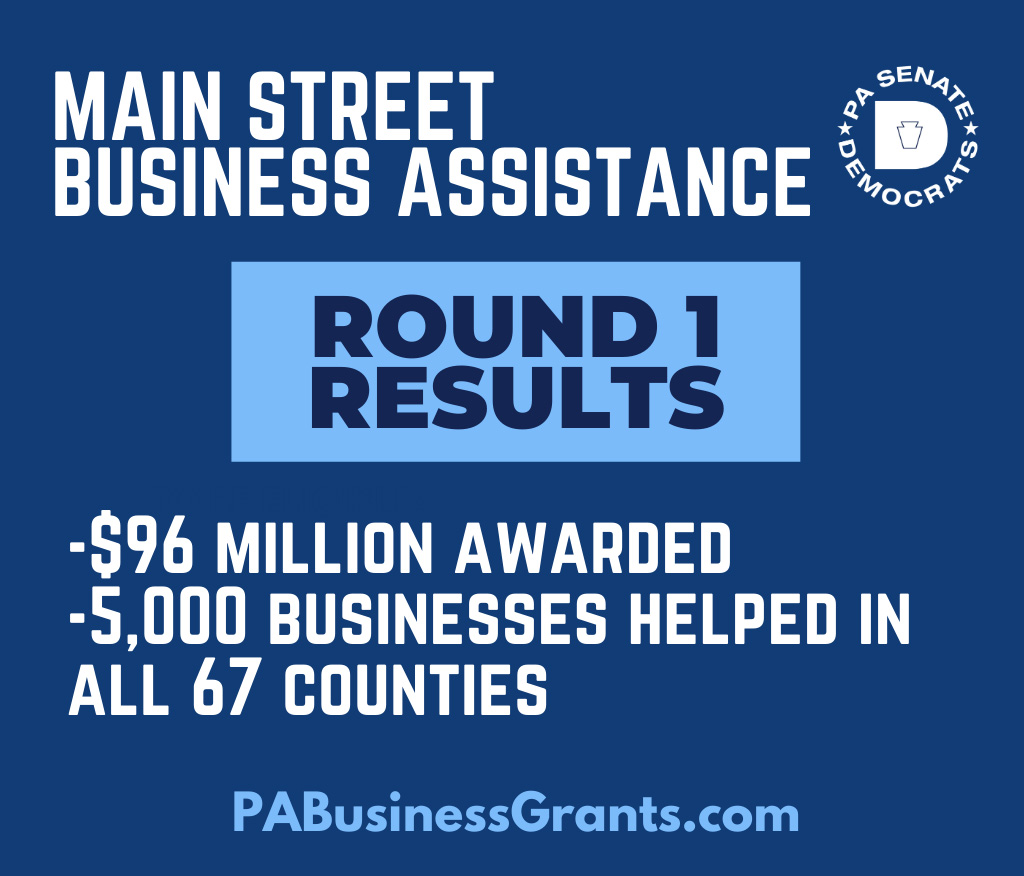 The program is part of $225 million in statewide relief championed by the senate democratic caucus in June to support small businesses economically impacted by the pandemic. The first application round drew a strong response with nearly 24,000 applications.
“We’ve seen the impact of this pandemic-fueled economic crisis on the small businesses in our communities and in the immense response to the program in the first round of applications,” said Daniel Betancourt, President & CEO of Community First Fund and Chair of the PA CDFI Network. “The PA CDFI Network is grateful for the partnership of Governor Wolf and the Pennsylvania Legislature as we move quickly to get these resources into the hands of those most impacted by the crisis.”
Of the close to 5,000 small businesses approved in the first round of funding, 50% are historically disadvantaged businesses that have traditionally experienced discrimination when seeking financial services and financial products. Over 2,400 of the businesses are also in communities targeted for business investment by state government programs like Main Street and Elm Street.
“I could not be more proud or more grateful for the great work of DCED and Pennsylvania’s CDFI Network in delivering substantive, fair, equitable, need-based assistance to our state’s main street and historically disadvantaged small businesses. Our program design and the accountability it provides to taxpayers and to our federal funders is a model for the nation,” Senator Blake (D-Lackawanna) said. “I appeal to the US Congress and to our colleagues on both sides of the aisle in Harrisburg to recognize the success of this program in assisting small businesses devastated by the pandemic and to invest further in the program so we can help even more of them.”
The program has targeted getting grants to small businesses with the greatest need and to be eligible to apply businesses had to have less than $1M in revenue and less than 25 employees. Grants ranged in size from $5,000 to $50,000 based on the revenue size of the business. More than 2,300 of the grantee business owners are low-moderate income.
“Our business community has been severely impacted by the COVID-19 pandemic and is in need of immediate assistance. The grant program is targeted to help small businesses manage costs, handle expenses, and stay in operation in this exceptionally difficult time,” said Senator Brewster (D-Allegheny). “Since COVID struck our state and debilitated our business community, I have been advocating for bridge grants and sought millions in aid for impacted businesses and workers. The small business assistance grants are one of the tools we can use to bolster business, maintain jobs and help workers at a time of immense distress.”
More than two thirds of the approved awardees are women-owned businesses and 16 percent located in rural communities. The businesses represent industries that have been especially hard hit by the pandemic including retail, food and hospitality, health and wellness, and personal care.
| Industry |
Applications Approved |
Amount (Millions) |
| Restaurants & Other Eating Places |
1,608 |
$25.80
|
| Drinking Places (Alcoholic Beverages) |
202 |
$4.63
|
| Personal Care Services |
1,001 |
$24.52
|
| Other Amusement and Rec. Industries |
180 |
$3.46
|
| Totals |
2,991 |
$58.41
|
“For minority and women-owned businesses in Pennsylvania COVID-19 didn’t create a crisis, it laid bare the crisis our minority entrepreneurs have been facing for decades,” House Democratic Finance Committee Chairman Jake Wheatley Jr (D-Allegheny) said. “While I’m glad to see the positive impact of these grants and I urge all local community businesses to apply for the next round of grants, we need to expand investment in programs like this because it’s long past time for the legislature to address the systemic flaws that are leaving too many marginalized people behind.”
The second grant application window for the relief funds opened today, August 10, and will remain open for 15 business days closing at 11:59PM on August 28.
“Our small business owners need our help and support,” said state Rep. Carolyn Comitta, D-Chester. “After limited or even no sales due to the virus for almost five months, it would be unfair to let them suffer alone without any intervention. These grants give our small businesses hope and, I am here with my democratic colleagues to provide them whatever help they need to address this pandemic. Our business owners, their employees, and their families deserve our assistance.”
In order to get funds to businesses in need as quickly as possible, the second application window will be the final opportunity to apply for the program. Qualified applicants not awarded in the first round do not need to reapply and will be rolled into the next round for consideration.
Eligible small businesses can apply online at pabusinessgrants.com or through any one of the 17 Community Development Financial Institutions (CDFIs) that are part of the Pennsylvania CDFI Network.
Summary_Round1
###
About the PA CDFI Network
The PA CDFI Network is a coalition of 17 PA-based community development financial institutions that primarily provide financing options for small businesses. The members of the coalition are as follows:
The Progress Fund (Counties Served: Allegheny, Armstrong, Beaver, Bedford, Blair, Butler, Cambria, Cameron, Centre, Clarion, Clearfield, Clinton, Crawford, Elk, Erie, Fayette, Forest, Fulton, Greene, Huntingdon, Indiana, Jefferson, Lawrence, Lycoming, McKean, Mercer, Potter, Somerset, Tioga, Venango, Warren, Washington, Westmoreland)
Bridgeway Capital (Counties Served: Allegheny, Armstrong, Beaver, Butler, Clarion, Crawford, Erie, Fayette, Greene, Indiana, Lawrence, Mercer, Venango, Washington, Westmoreland)
Northside Community Development Fund (Counties Served: Allegheny, Beaver, Greene, Lawrence, Washington)
Metro Action (Counties Served: Carbon, Lackawanna, Luzerne, Monroe, Pike, Schuylkill, Susquehanna, Wayne, Wyoming)
Rising Tide Community Loan Fund (Counties Served: Bradford, Bucks, Carbon, Columbia, Lehigh, Monroe, Northampton)
ASSETS (Counties Served: Berks, Juniata, Lancaster, Mifflin, Snyder, York)
Community First Fund (Counties Served: Adams, Berks, Chester, Cumberland, Dauphin, Delaware, Franklin, Lancaster, Lebanon, Lehigh, Montgomery, Northampton, Perry, Philadelphia, York)
Reinvestment Fund (Counties Served: All Counties)
PIDC Community Capital (Counties Served: Philadelphia)
Impact Loan Fund (Counties Served: Montgomery, Montour, Northumberland, Philadelphia)
Beech Capital (Counties Served: Bucks, Chester, Dauphin, Delaware, Erie, Montgomery, Philadelphia, York)
West Philadelphia Financial Services Institution (Counties Served: Bucks, Chester, Delaware, Montgomery, Philadelphia)
Enterprise Center Capital (Counties Served: Berks, Bucks, Chester, Cumberland, Dauphin, Delaware, Montgomery, Northampton, Philadelphia)
Neighborhood Progress Fund (Counties Served: Chester, Delaware, Montgomery, Philadelphia)
Entrepreneur Works (Counties Served: Bucks, Chester, Delaware, Montgomery, Philadelphia)
Women’s Opportunities Resource Center (Counties Served: Bucks, Chester, Delaware, Montgomery, Philadelphia, Sullivan, Susquehanna, Wyoming)
United Bank (Counties Served: Blair, Bucks, Cambria, Chester, Delaware, Lackawanna, Luzerne, Montgomery, Philadelphia, Union)
The members of the Executive Committee of the network are:
- Daniel Betancourt, Community First Fund — Chair
- James Burnett, West Philadelphia Financial Services Institution — Vice Chair
- Lynne Cutler, Women’s Opportunities Resource Center (WORC) — Vice Chair
- Leslie Benoliel, Entrepreneur Works — Treasurer
- Mark Masterson, Northside Community Development Fund — Secretary
- Chris Hudock, Rising Tide Loan Fund — Assistant Treasurer
